
Effective Habit Tracking Methods for Lasting Progress
Discover effective habit tracking methods using hybrid systems and feedback loops to build lasting habits and improve productivity.
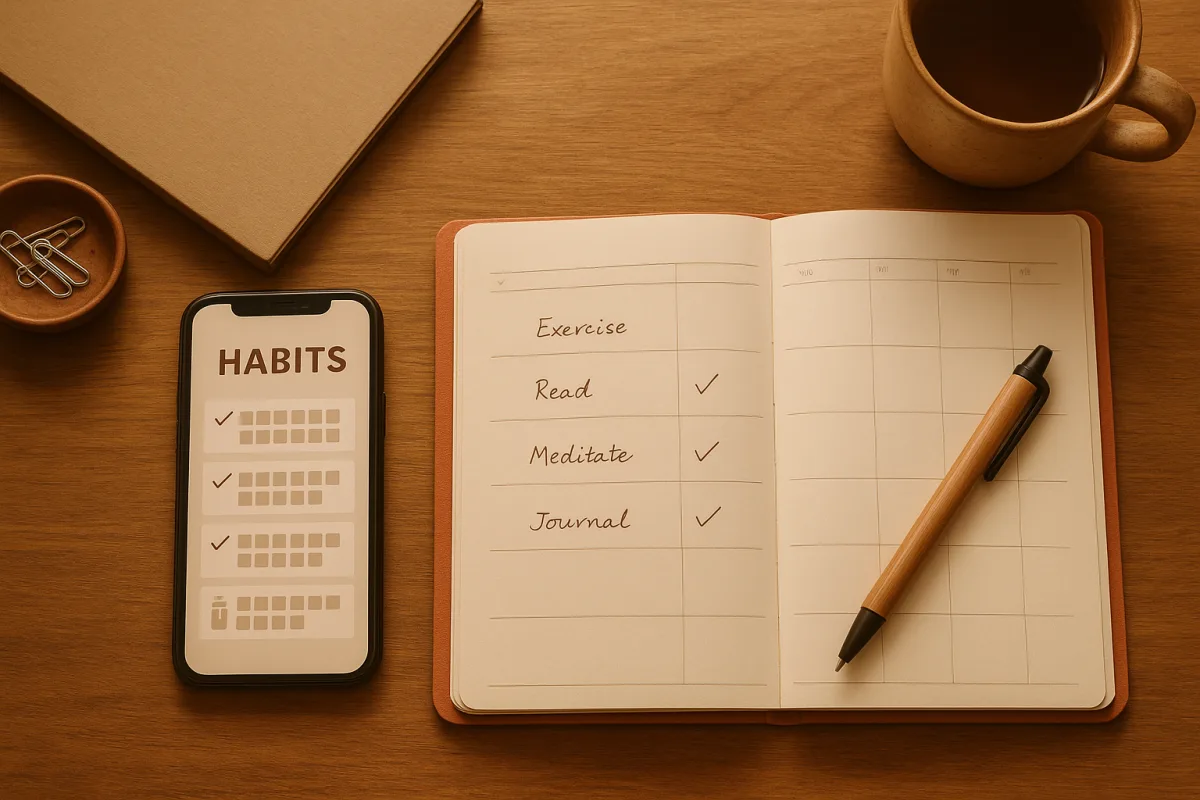
The effective method is not a streak, it is a feedback loop
Habit tracking is often presented as a choice between a paper calendar and an app. That is the visible choice, but it is not the important one. The useful distinction is whether the tracker produces a feedback loop you will actually use.
A tick means only that you believe the behaviour happened. A feedback loop asks a more useful sequence of questions: what did I intend to do, did it happen, under what conditions, and what will I alter next week?
Self-monitoring and visible progress are associated with better progress toward goals, according to the evidence summary collected by HabitDex. [2] That is the strongest general case for tracking. It does not establish that a particular app, notebook layout, or 30-day challenge creates lasting habits.
The system that seems most practical is a hybrid: immediate digital logging during the day, followed by a short analog review once a week. It separates two jobs that many trackers awkwardly try to perform at once.
Daily logging is an evidence record. Weekly review is interpretation. Keeping both in the same busy app screen often leads to the familiar pattern of tapping complete for several days, then abandoning the record when life stops fitting the plan.
A comparison published by EHM Tech reported 67% completion for digital trackers and 59% for analog methods over 30-day challenges. It also found higher satisfaction among paper users, 8.2 out of 10 versus 7.4, while the hybrid group reached 71% completion. [6]
Those numbers are useful as a prompt, not a final verdict. They concern short challenges, not years of behaviour, and come from a habit-tracking publisher rather than a large independent long-term trial. The sensible reading is that each format has a different strength.
Digital tools reduce the cost of recording. Paper makes it easier to slow down and notice patterns. Combining them can work because it avoids asking one tool to do both jobs perfectly.
What the hybrid method asks of you each day
Pick one or two habits, not a personal redevelopment programme. A good starting habit is concrete enough to mark without debate: “write for ten minutes after making coffee” is trackable, while “be more creative” is not.
Then define the minimum version. For writing, that might be opening the document and writing one sentence. The aim is not to make the tracker certify an impressive day. It is to preserve a cue and a small action on days when the full plan will not happen.
Habit stacking gives the action a place in the day: “After I make coffee, I will open the document and write one sentence.” The technique links a new behaviour to a recurring one, which can reduce the need to remember an isolated intention. [20]
The daily part takes a few seconds. When you complete the minimum action, mark it in an app or digital list immediately. HabitDex recommends immediate daily logging for accuracy and reinforcement, with weekly reviews for identifying patterns. [2]
Immediate does not mean obsessive. The point is to avoid reconstructing Wednesday from memory on Sunday, then filling every blank with either optimistic guesses or unnecessary guilt. A missed mark is information, not a debt.
For each miss, use a simple code rather than a long diary entry. “No time,” “wrong place,” “forgot,” and “too tired” are enough. The codes reveal whether the problem is scheduling, environment, cueing, or whether the habit was simply too large.
This is where streaks become less useful than they first appear. A streak answers whether you did something on consecutive dates. It does not distinguish a habit that fails on travel days from one that has no workable place in your routine.
The old calendar method often called Jerry Seinfeld’s “don’t break the chain” approach remains popular because one visible mark per day is nearly frictionless. [4] It suits a behaviour with a clean yes-or-no definition, such as taking a daily medication exactly as prescribed or practising a language for five minutes.
It is less suitable for variable work. If your target is “make meaningful progress on a research project,” a chain can push you to count token activity while hiding whether the work is moving. Use a measure that matches the job.
The weekly paper review does the work a dashboard cannot
Once a week, use a notebook or one printed page. Spend ten or fifteen minutes looking at the marks, the misses, and the coming week. This is the part that makes tracking a personal system rather than a collection of coloured squares.
Write three lines. First: which days and contexts produced the behaviour? Second: what stopped it? Third: make one adjustment for the next week. The adjustment must change the conditions, not merely restate the goal with more force.
For example, if “exercise after work” fails four times because meetings run late, change the plan to a ten-minute walk after lunch on meeting-heavy days. If you consistently forget, put the shoes by the door or attach the action to lunch.
This approach addresses several common failure modes identified in guidance from HabitCove and ClickUp: tracking too many habits, choosing overly ambitious targets, failing to review the data, all-or-nothing thinking, and ignoring the surrounding environment. [16] [17]
A weekly review should also decide whether to keep tracking. After several stable weeks, you may no longer need a daily mark for a habit that happens automatically. Continuing to count it can turn a useful prompt into administrative residue.
Keep the tracker for behaviours that still need attention, are easy to postpone, or matter because circumstances change. The purpose is not to create a permanent personal surveillance system. It is to make a temporary problem visible enough to alter.
A monthly or quarterly check is different again. Ask whether the habit is producing the outcome you wanted, whether its minimum version needs raising, or whether it should be dropped. HabitDex and Conquering Business both recommend periodic longer reviews alongside daily logging and weekly pattern review. [2] [14]
App choice: pay for less friction, not promises
The app market is large, but most choices are variations on reminders, checkboxes, streaks, charts, and rewards. Habi estimates the habit-tracking market at $1.7 billion in 2024, projecting $5.5 billion by 2033. [8] Market growth is not evidence that any individual tool will fit your week.
For a simple private checklist on Apple devices, Streaks is a one-time $4.99 purchase. Toolradar lists it among leading trackers, and it suits someone who wants recurring tasks without another monthly bill. [3]
TickTick costs $3.99 per month or $35.99 annually, according to Toolradar. [3] It suits people who already manage tasks and calendars there and want habits alongside ordinary commitments, rather than maintaining separate systems.
Habitica has a free tier and a $4.99-per-month premium option. [3] [10] It turns tasks and habits into a game with rewards and progression, which may suit someone motivated by playful external structure but not someone who finds game mechanics childish or distracting.
Way of Life is listed at a $4.99 one-time purchase by Human Picks. [9] It suits a person who wants a lower-commitment app purchase and straightforward tracking, rather than a subscription built around continual feature additions.
HabitNow subscriptions start at $1.99 per month, while Finch can cost up to $9.99 per month, according to 2sync. [11] HabitNow suits a budget-conscious user willing to work within a subscription model, while Finch suits someone who specifically values its more companion-like, gamified approach.
These prices cover software access, not better habit design. Premium tiers commonly sell analytics, integrations, and gamification. [9] Before paying, try tracking one habit with the free version or a plain reminder for two weeks. If you do not log consistently, more graphs are unlikely to solve the problem.
The evidence on digital versus paper remains unsettled over longer periods. One commercial comparison of AI-based trackers and analog journals reported a 37% increase in daily logging for AI tools, but only a 19% improvement in six-month maintenance, while qualitative analog journal users reached 52% adherence at six months. [7]
That source should not be treated as decisive science, particularly given its commercial setting and the absence of comparable broad long-term trials. Its more modest lesson is credible: logging frequency and durable behaviour are different outcomes.
Where this method breaks
Hybrid tracking has costs. It requires a phone or device within reach, a weekly appointment with yourself, and tolerance for looking at imperfect records. If the weekly page feels like a performance review, it will probably be avoided.
It also does not suit every goal. For habits with complex quality standards, such as improving writing, managing a team, or learning an instrument, use the tracker only for the repeatable practice session. Assess quality separately through the work itself.
Do not use a habit tracker to self-diagnose declining mood, persistent exhaustion, insomnia, concentration problems, or suspected burnout. An AI study-habit system called RIACT proposes personalised insights and burnout-signal detection, but software flags are not medical assessment. [1]
If those issues are affecting daily life, talk to a doctor or qualified clinician rather than trying to optimise sleep, focus, or mood with a better streak. A tracker can provide notes that may help you describe a pattern, but it cannot tell you what the pattern means.
There is also no direct research establishing which habit-tracking method works best across cultures or regions. Research on broader productivity interventions suggests context can affect results, but it does not answer this question for trackers themselves. [22]
That uncertainty is a reason to run a small, ordinary experiment. Track one habit daily, review on paper for four weeks, and change only one condition at a time. The result will not be universal, but it will be more useful than borrowing someone else’s elaborate system.
Frequently Asked Questions
What are the most effective habit tracking methods?
The most effective method combines digital and analog approaches in a hybrid system. Immediate digital logging during the day captures accurate data with low friction, while a weekly paper review allows for reflection, pattern recognition, and adjustments. This hybrid approach yields higher completion rates and satisfaction than using only digital or analog methods.
How does a hybrid habit tracking system work?
A hybrid system involves logging habits digitally as they happen each day for accuracy and reinforcement, then conducting a weekly review on paper to interpret the data. The daily digital logs serve as an evidence record, while the weekly analog review focuses on understanding successes and misses, and planning adjustments for the next week.
Why is weekly review important in habit tracking?
Weekly review helps identify patterns in behaviour and obstacles that daily logging alone cannot reveal. It encourages reflection on what worked, what stopped the habit, and what environmental or scheduling changes are needed. This process transforms tracking from mere record-keeping into a feedback loop that supports habit improvement.
How can habit stacking improve habit tracking?
Habit stacking links a new habit to an existing routine, providing a clear cue that reduces the need to remember the new behaviour independently. For example, attaching writing one sentence to the act of making coffee creates a reliable prompt, making the habit easier to perform and track consistently.
What should I track besides streaks in habit tracking?
Beyond streaks, it is important to track the behaviour’s context and reasons for misses using simple codes like “no time,” “forgot,” or “too tired.” This information reveals whether failures are due to scheduling, environment, or habit size, allowing more informed adjustments than streak counts alone.
How we researched this
This article was assembled from 22 cited references.
Nothing here is based on hands-on testing. Where a figure or finding appears, it belongs to the source cited beside it, and the writing says so rather than implying otherwise. Every source is listed below so you can check it.
Sources
- RIACT: A Responsible AI System for Personalized Study Habit Tracking and Early Burnout Signal Detection in University Students
- Habit Tracking: Does It Work? The Science + How to Start | HabitDex
- Best Habit Tracking Tools in 2026 | Toolradar
- The Complete Guide to Habit Tracking in 2026: Methods, Tools & Science | HabitFlux
- 7 Habit Tracking Methods Compared: Which One Sticks? (2026)
- Paper vs Digital Habit Tracking: Which Works Better?
- Ai-powered Habit Tracker Vs Analog Journal What Metrics Actually Predict Lasting Behavior Change
- 30+ Habit Statistics (2026): Why Most Habits Fail | Habi
- Best Habit Tracker Apps for 2026 | Human Picks
- Is Habitica Free? Habitica Pricing, Plans and Costs (2026)
- 12 best habit tracking apps in 2026 | 2sync
- Best Habit Tracker Apps 2026 — Build Better Routines — BMcks Apps
- Best Habit Tracker Apps in 2026: 13 Tested & Compared
- The Complete Habit Tracker Guide
- The Complete Guide to Habit Tracking in 2026
- Why Most Habit Trackers Fail (And How to Fix It) | HabitCove Blog | HabitCove
- Habit Tracker: How It Works, Best Formats, and What to Track
- Best Habit Tracker Apps: 10 Tools Backed by Research (2026)
- 10 Habit Building Mistakes That Make You Quit (2026)
- Habit Stacking: The Psychology Behind Building Habits That Actually Stick | Simply Psychology
- Reward System for Productivity: Build Self-Reinforcing Habits
- An Investigation of Cross-Cultural Differences on the Impact of Productivity Interventions: The Example of ProMES - Anthony R. Paquin, Sylvia G. Roch, Maria L. Sanchez-Ku, 2007
Related Articles

Productivity Techniques for Writers
Discover the best productivity techniques for writers, including ideal session lengths and focused time blocks to boost writing output.
How to Measure Productivity Effectively
Learn how to measure productivity effectively using progress, quality, and time tracking for meaningful insights into your work.

Best Habit Tracking Apps: Comparing Habitify and Streaks
Compare the best habit tracking apps Habitify and Streaks to find the right tool for your devices and habit goals in 2026.
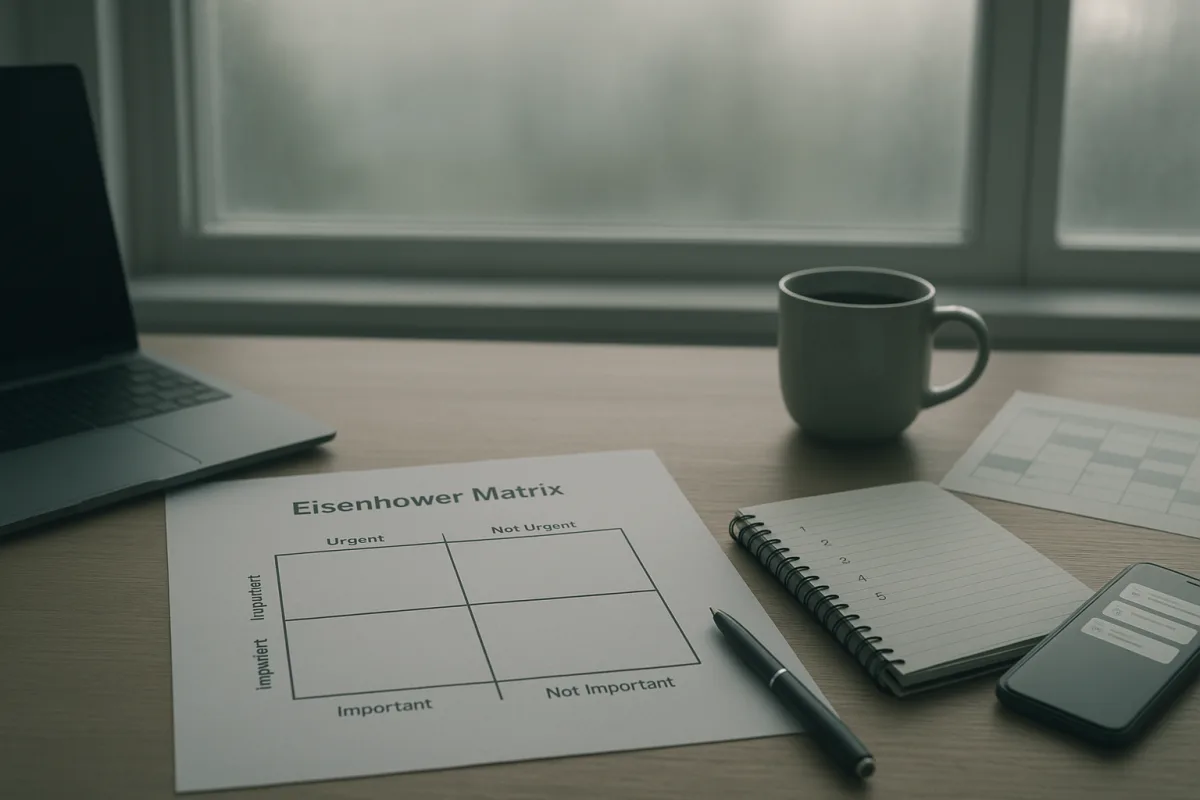
How to Prioritize Tasks Effectively for Better Productivity
Learn how to prioritize tasks effectively using proven methods like the Eisenhower Matrix and impact scoring to boost your productivity.