
Pomodoro Technique: How This Time-Management Method Works
Learn what the Pomodoro Technique is, how it works, and how to use timed work intervals and breaks to boost focus and productivity.
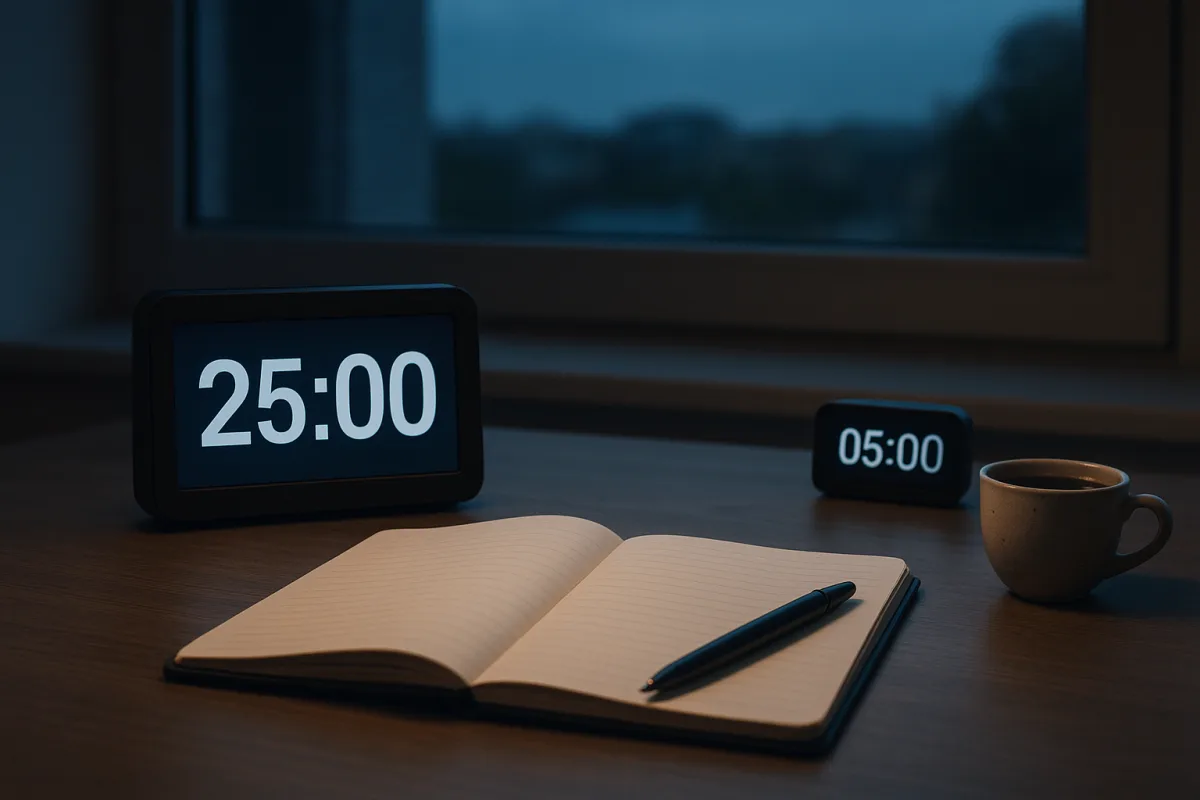
The basic idea: work in bounded rounds
The Pomodoro Technique is a time-management method developed by Francesco Cirillo in the late 1980s. Its name comes from the tomato-shaped kitchen timer Cirillo used, pomodoro being the Italian word for tomato. [1][3]
The standard version is simple enough to explain on a sticky note. Choose a task, set a timer for 25 minutes, work until it rings, then take a five-minute break. That 25-minute work period is one Pomodoro. [1]
After four Pomodoros, take a longer break, usually 15 to 30 minutes. Then begin another set of rounds if there is more work to do. The method is deliberately repetitive, which is both its appeal and its main cost. [1][16]
What it asks of you is not merely to own a timer. It asks you to decide what counts as one task, protect a short block from interruption, stop when the timer ends, and genuinely leave the task during the break.
That last part is frequently misunderstood. A Pomodoro is not “work for roughly 25 minutes while answering the occasional message.” If you are doing email, checking a chat app and drafting a report, you are not using the technique to create focus.
What happens during a single Pomodoro
Before starting the timer, make the task concrete. “Work on presentation” is too broad because it gives you no clear place to begin. “Draft the three opening slides” or “find two sources for the background section” is more usable.
Then start the timer and work only on that task for the chosen interval. If another thought appears, such as remembering to book an appointment or answer a colleague, write it down somewhere and return to the work.
This capture step matters because it distinguishes a real interruption from a passing urge to switch tasks. You are not trying to become a person who never has distracting thoughts. You are giving those thoughts a place that is not the current work block.
When the timer ends, stop. The original format calls for a five-minute break, not five extra minutes to finish a paragraph because stopping feels inconvenient. [1] The boundary is part of the system, rather than an optional reward for unusually productive work.
A short break can mean standing up, getting water, looking away from the screen, or doing a small physical task. It should be low-stakes enough that you can return when the next timer begins.
Checking social media is a common bad fit for this role. ClockUnit, Timeeting and ZenTick all identify ineffective breaks, multitasking and skipped breaks among the habits that weaken the method. [12][13][14] A feed designed to keep you engaged is not a reliable five-minute activity.
After four work rounds, take the longer break. In the conventional schedule, that means 100 minutes of work, four short breaks, and then a longer reset. The arithmetic is useful because it makes planning less abstract.
If you have a task estimated at four Pomodoros, you are not promising yourself “a quick two-hour job.” You are allowing for 100 minutes of focused work plus breaks, and probably some margin for setup, interruptions and revision.
What the method is trying to solve
The Pomodoro Technique is often presented as a way to improve concentration. More practically, it solves two different problems: getting started on a task you are avoiding, and avoiding the point where work becomes increasingly sloppy or effortful.
A 25-minute commitment can feel more manageable than an open-ended instruction to focus all afternoon. You do not need to finish a report before beginning. You need to work on the next defined part until the timer ends.
The scheduled break also removes a recurring negotiation. Without a stopping point, it is easy either to keep going long after concentration has flattened or to take breaks whenever the task becomes difficult, then lose the thread completely.
There is research support for the general principle here, with an important qualification. A 2025 scoping review in BMC Medical Education examined Pomodoro-style study sessions and found that structured study and break periods can support retention and engagement, while also noting limits in the available evidence. [18]
A 2025 review of the wider evidence on structured work intervals similarly supports planned breaks for sustaining task performance and reducing mental fatigue compared with entirely self-paced breaks. [11] That is support for the pattern, not a laboratory verdict on Cirillo’s exact timer settings.
There is no substantial evidence that 25 minutes is a biologically privileged unit of attention. The familiar 25/5 schedule is a convention that has survived because it is easy to remember, easy to try and short enough to lower the barrier to starting. [11][18]
That distinction is worth keeping. If a 25-minute interval does not suit your work, the useful response is not to accuse yourself of failing the technique. It is to change the interval, or use a different system.
Where the standard 25/5 format breaks
Twenty-five minutes can be too short for work with a large setup cost. Writing code, analysing a spreadsheet, editing a complicated document or reading a technical paper may require several minutes just to reconstruct context after an interruption.
For that sort of work, a timer can become an annoyance if every break arrives just as the task is becoming clear. Tomatoi.st lists longer alternatives such as 50 minutes of work followed by 10 minutes off, which preserves the structure while reducing restarts. [4]
A 90/20 arrangement is another common adaptation, often linked to the idea of longer attention cycles or ultradian rhythms. FocusFlowPomodoro.com presents it as an option for people who can sustain deeper work for longer, not as a rule backed by a fixed universal rhythm. [15]
The evidence does not establish one best pattern. Work type, experience, interruptions and individual preference all affect whether an interval feels helpful. Recommendations ranging from 15/3 to 52/17 are common, but they should be treated as experiments rather than prescriptions. [4][5][15]
Shorter rounds can help when starting is the hard part. Someone facing an unpleasant administrative task may find 15 minutes sufficiently small to begin, especially when the alternative is waiting for motivation that may not arrive.
Longer rounds can work better when the task has momentum. They are not automatically more serious or more disciplined. They simply impose fewer transitions, which can be valuable when restarting has a high cognitive cost.
The break length needs adjustment too. Practical guides commonly place short breaks between roughly three and 10 minutes, while long breaks in real use range more widely than the familiar 15 to 30 minutes. [5][6]
If a five-minute break reliably turns into 25 minutes, shortening it or changing the activity may be more realistic than repeatedly making the same plan. If you use a longer work interval, a slightly longer break may be necessary to make the next round viable.
The mistakes that make it feel useless
The most basic failure is choosing an undefined task. “Do taxes” could contain sorting receipts, locating forms, entering figures, checking details and sending a return. A timer does not decide which of those actions you should take first.
Timeeting recommends breaking large work into smaller, visible units before starting the clock. [13] This is not bureaucratic planning for its own sake. It prevents spending the first ten minutes deciding what “work on it” means.
Another failure is treating a Pomodoro as a container for several jobs. A round spent moving between email, a document, a group chat and a browser may be busy, but it does not provide the single-task constraint that gives the method its point.
Skipping breaks is the other predictable error. It can feel efficient, particularly when you are on a roll, but then you are using a timer as a work-duration counter rather than a work-rest system. ClockUnit and ZenTick both flag skipped breaks as a frequent implementation problem. [12][14]
There is also no rule requiring you to stop in the middle of a sentence or leave a fragile train of thought unfinished. A practical approach is to note the next action before stepping away, then begin there after the break.
The method is least suitable when you cannot control interruptions. Front-desk roles, caregiving, live customer support and many collaborative jobs may involve demands that arrive without regard for your timer. In those settings, short planned blocks may still help with back-office work, but not with the job’s central responsive duties.
It can also be a poor fit for meetings, calls and work requiring prolonged joint attention. You can use Pomodoros for preparation or follow-up, but imposing a five-minute departure every 25 minutes on other people is generally not how collaborative work functions.
If concentration, sleep, energy or mood has become difficult in a persistent or distressing way, a timer is not the right diagnostic tool. Those concerns belong with a doctor or qualified mental-health professional, not a productivity system adjusted one interval at a time.
Timers and apps: useful administration, not evidence
You can run the method with a kitchen timer, watch, phone alarm or browser tab. The core requirements are a visible start, a clear stop and a way to avoid silently extending the work block.
Apps mainly add record-keeping and friction reduction. Pomodoist and Focus To-Do were listed among the top-ranked Pomodoro timer apps as of October 7, 2026, with task lists, adjustable intervals and focus records among the features people look for. [7][8]
Other commonly recommended options include Forest, Session and TickTick. Forest uses a gamified visual system, while Session and TickTick combine timing with broader app features such as task or calendar management. [7][9][10][17]
Those are feature differences, not proven productivity differences. There is limited direct research comparing Pomodoro apps or showing that gamification produces better task outcomes than a plain timer. An app is useful only if it reduces the effort of starting and returning.
For a person who already uses a task manager, an integrated timer may be convenient. For someone distracted by phones, a physical timer or a minimal desktop tool may be the better design, because it does not put the break button beside every other source of interruption.
The simplest way to try the technique is to choose one task that can be completed or advanced in 25 minutes, run two rounds, and observe what actually happened. Did the task definition hold up, did the break restore anything, and did the timer interrupt useful momentum?
Those answers determine the next adjustment. Keep the structure if it helps you begin and continue. Change the interval if the timing is wrong. Drop it for work that does not fit. The Pomodoro Technique is a scheduling tool, not a test of character.
Frequently Asked Questions
What is the Pomodoro Technique and how does it work?
The Pomodoro Technique is a time-management method developed in the late 1980s by Francesco Cirillo. It involves choosing a concrete task, working on it for a set period without interruptions, then taking a short break. After completing four such work intervals, called Pomodoros, you take a longer break. This cycle helps manage focus and mental fatigue.
How long is one Pomodoro session?
A standard Pomodoro session consists of 25 minutes of focused work followed by a five-minute break. After completing four Pomodoros, a longer break of 15 to 30 minutes is taken. However, these intervals are defaults and can be adjusted to better suit individual tasks or preferences.
What are the benefits of using the Pomodoro Technique?
The technique helps overcome procrastination by breaking work into manageable chunks and encourages sustained focus by scheduling regular breaks. It also prevents work from becoming overly effortful or sloppy by limiting continuous work time and providing planned rest periods, which research shows can improve concentration and reduce mental fatigue.
How can I adapt the Pomodoro Technique to different tasks?
You can change the length of work and break intervals to fit the nature of your task. For example, longer analytical tasks may benefit from intervals like 50 minutes of work followed by 10 minutes of rest, while shorter intervals can make starting intimidating tasks easier. The key is to find a rhythm that maintains focus without causing burnout.
What are common mistakes when using the Pomodoro Technique?
Common errors include vague task definitions, multitasking during Pomodoros, skipping breaks, and using breaks for distracting activities like social media. These habits weaken the method’s effectiveness by reducing focus and rest quality. It is important to clearly define tasks, protect work intervals from interruptions, and take genuine breaks.
How we researched this
This article was assembled from 19 cited references.
Nothing here is based on hands-on testing. Where a figure or finding appears, it belongs to the source cited beside it, and the writing says so rather than implying otherwise. Every source is listed below so you can check it.
Sources
- Pomodoro® Technique - Time Management Method
- Pomodoro Technique: How It Works and When to Use It
- What is Pomodoro Technique time management?
- Pomodoro Technique Variations: Beyond the Standard 25/5 | Pomodoro Playbook
- Pomodoro Technique Timing: Intervals, Breaks, and Duration
- How Long Should Pomodoro Breaks Be? | PomodoroMe
- Best Pomodoro Timer Apps in 2026 | UMA Technology
- 独自に時間設定ができるポモドーロ実践ツール『Focus To-Do』【今日のライフハックツール】 | ライフハッカー・ジャパン
- Forest Review: Gamified Focus App That Helps You Beat Phone Addiction
- Best Pomodoro Timer Apps 2026 — Top 7 Picks | Lazeno ERP
- Does the Pomodoro Technique Actually Work? What the Science Says — Aftertone
- Common Pomodoro Mistakes (and How to Fix Them) | ClockUnit
- Pomodoro Technique: The Complete Guide (2026)
- Common Pomodoro Mistakes (and Fixes) | ZenTick
- Pomodoro Variations: 5 Adaptations for Different Work Styles
- Pomodoro Technique: The 25/5 Method Explained
- Session - Private Messenger - Social Networking App | MWM
- Assessing the efficacy of the Pomodoro technique in enhancing anatomy lesson retention during study sessions: a scoping review | BMC Medical Education | Springer Nature Link
- The Pomodoro Technique: A Complete Guide to Focused Productivity
Related Articles
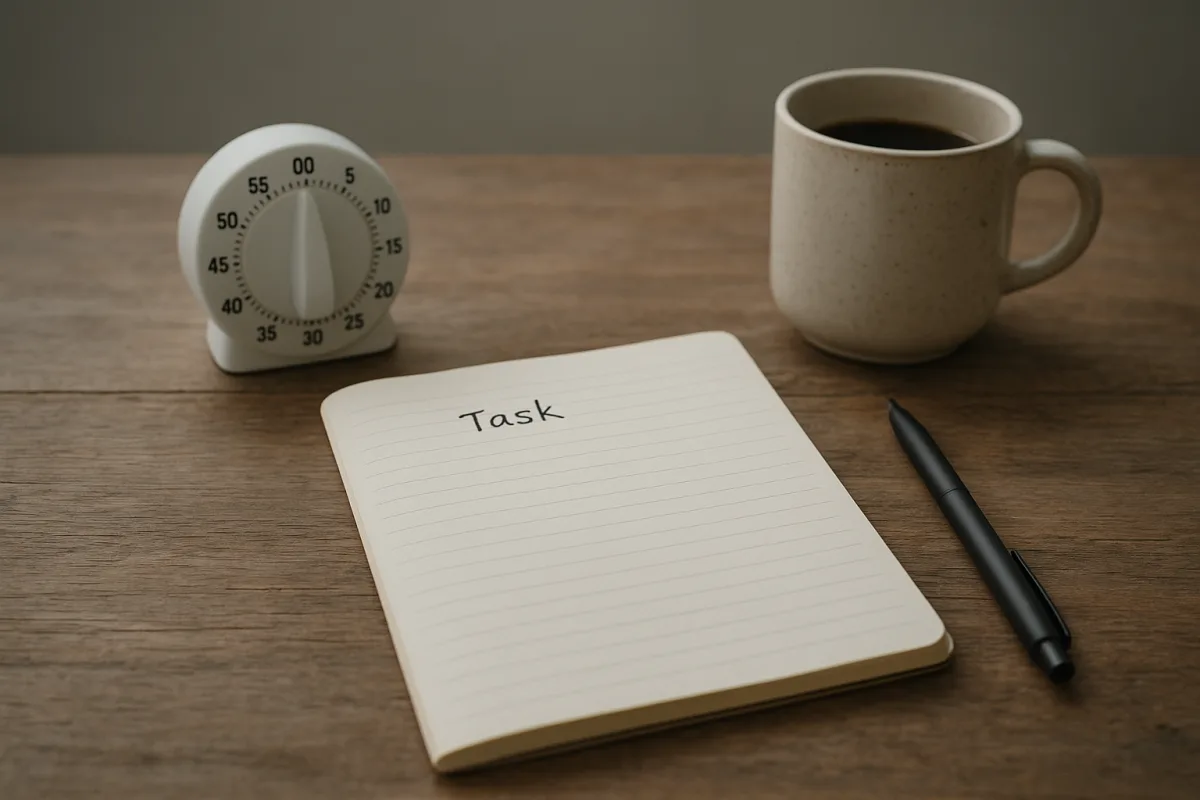
Structured Focus Intervals
Learn how structured focus intervals like the Pomodoro technique improve productivity with timed work and breaks for better concentration.

Productivity Techniques for Writers
Discover the best productivity techniques for writers, including ideal session lengths and focused time blocks to boost writing output.

52 17 Productivity Technique for Remote Work Focus Cycles
Learn the 52 17 productivity technique for remote work: focus blocks and breaks that boost deep work and reduce distractions effectively.
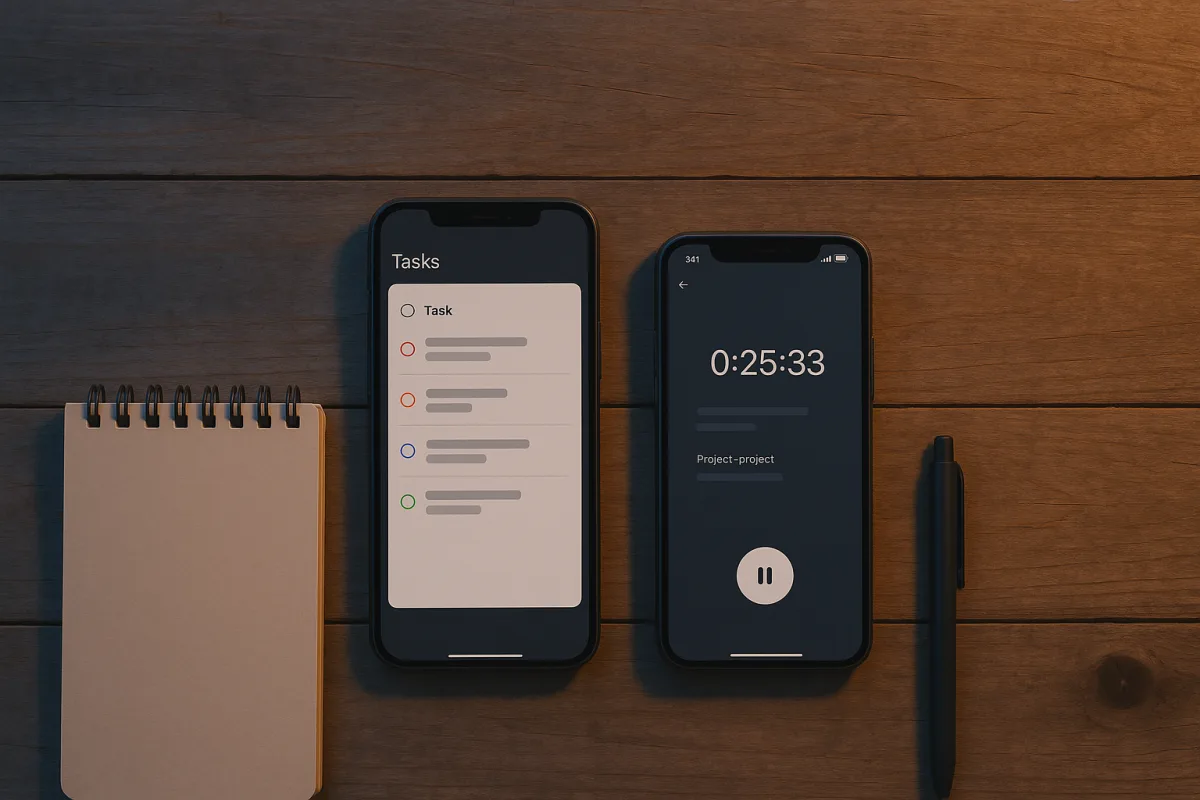
Time Management Apps Comparison: Todoist vs Toggl Track
Explore a detailed comparison of time management apps Todoist and Toggl Track, focusing on features, pricing, and user experience.