
Minimize Distractions at Work: Practical Strategies to Focus
Learn how to minimize distractions at work with practical tips on managing notifications, focus blocks, and communication for better productivity.

The first distraction arrives before work begins: your phone
Most distraction plans fail at the point where work has not quite started. You open a document, see a phone alert, answer one message, then return to a browser already carrying three unrelated tabs.
Start by separating necessary alerts from merely available ones. Calls from family, a calendar reminder for an essential meeting, or an authentication prompt may stay on. Social alerts, news, retail notifications, and non-urgent group chats should not compete with work. [4]
The practical version is less dramatic than deleting every app. Put the phone out of reach before beginning a focus block, silence non-essential alerts, and decide when you will next look at it. The decision matters because it removes repeated negotiation.
If app settings are too easy to override, a physical barrier may be useful. Marie Claire’s account of Brick, a phone-blocking device that requires a deliberate physical interaction to change access, points to its appeal: it inserts friction where software limits can be dismissed quickly. [19]
That does not make a physical blocker a proven solution. The research brief found no broad empirical comparison between devices such as Brick and software-only blocking, nor evidence on long-term adherence. Treat it as an option for a specific problem, impulsive checking, not a cure for distraction.
Then your inbox starts setting the day’s agenda
Once the phone is quieter, work chat and email usually take over. An unread badge is designed to make absence feel urgent, but most messages are requests for attention rather than emergencies requiring an immediate answer.
Set two to four communication check-in times during the workday. For example, check at the start of the day, before lunch, mid-afternoon, and before shutdown. Guidance collected in the research brief associates notification reduction and communication batching with recovering one to two hours of deep work daily. [4]
This only works if colleagues know what to expect. Put your focus time on the shared calendar, set a status message that names your next reply window, and give people a route for genuine urgency, such as a call or a designated urgent channel. [1][11]
Do not silently disappear if your role involves rapid coordination. A customer-support worker, executive assistant, incident responder, or manager covering a live operation may need shorter check-in gaps. The aim is not delayed communication as a virtue, it is making response expectations visible.
Remote teams can often rely more heavily on asynchronous updates, written handoffs, and shared documents. That reduces the need to keep chat open all day. Remote-work guidance consistently recommends dedicated communication windows and notification management for this reason. [1][12]
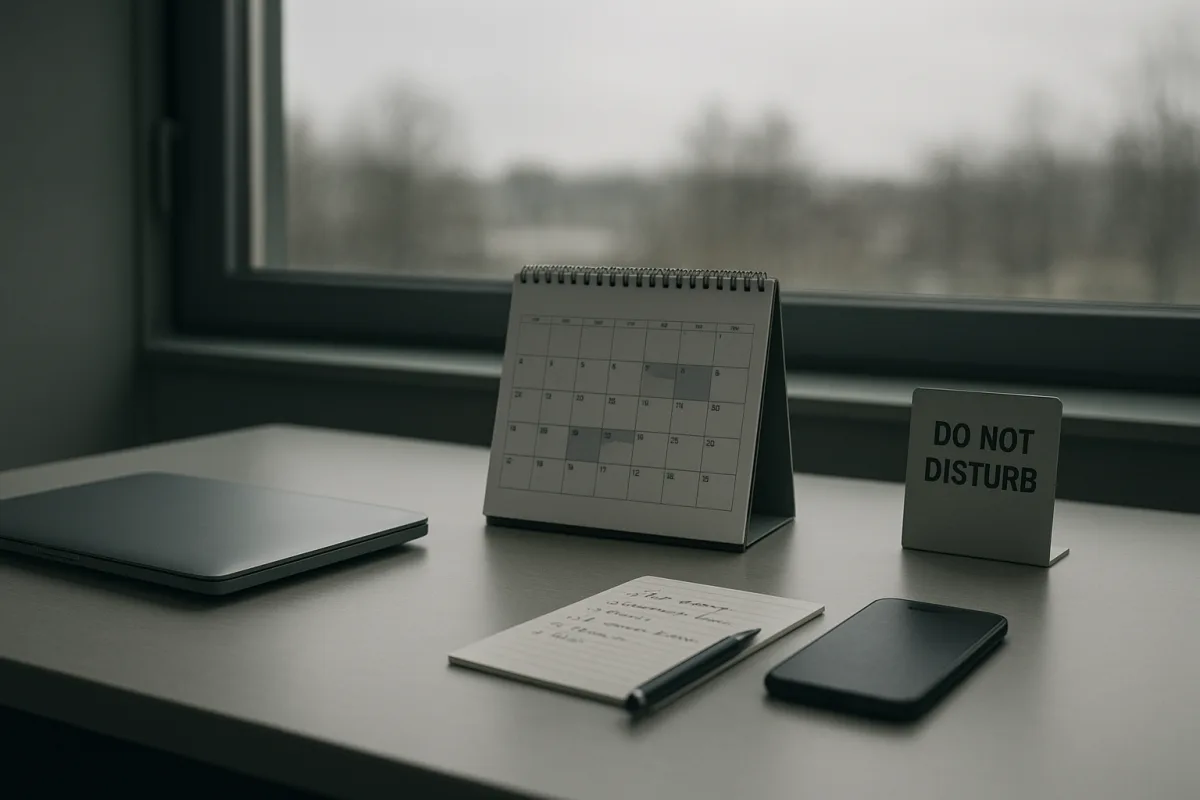
In an office, the equivalent problem is often the person who can see you. A visible desk signal, headphones, a small sign, or an agreed calendar status can do what an asynchronous message does remotely: tell colleagues whether an interruption is welcome. [10][15]
When you finally begin, protect a block long enough to matter
A blank calendar tends to become a meeting calendar. Reserve at least one protected 60 to 90-minute block for work that requires thought, writing, analysis, planning, or careful decisions, before other people claim the hours. [3]
Treat that block like a meeting with an external client. Choose one concrete output, such as revising a proposal section, reconciling a dataset, or drafting an analysis, rather than writing “focus time” and hoping concentration supplies the task.
Before starting, close the files that do not serve that output. Keep the needed document, reference material, and communication route for real emergencies. A crowded desktop creates extra choices, and workspace guidance repeatedly recommends reducing visual clutter. [14][16]
This is not an argument for a perfectly bare desk. If a notebook, printed brief, water bottle, or calculator helps you complete the task, it belongs there. Remove objects that invite switching, not objects that support the work.
Multitasking is the common way a focus block gets quietly lost. The research brief cites estimates that multitasking can reduce efficiency by up to 40 percent. [8] Exact losses will vary by task, but switching between messages and demanding work has a cost.
A useful rule is to capture interruptions without following them. Keep a scratch note labeled “later.” When you remember an email, a chore, or a research question, write it down, then return to the next visible step in the current task.
The timer goes off, or your attention does
There is no evidence-supported universal work interval. Pomodoro’s 25 minutes of work and five minutes of rest is common, but the research brief also identifies 52 minutes on and 17 off, plus 90-minute blocks followed by 15 to 20-minute breaks, as workable patterns. [3][5]
Use 25/5 when getting started is the hard part, when the work is unpleasant, or when you must rotate through small administrative tasks. The short finish line can be more useful than an ambitious plan that never begins.
Try 52/17 or 60/10 when you are doing steady desk work and 25 minutes breaks momentum too often. Try 90 minutes only for work that needs a longer runway, and only if your schedule and attention can sustain it.
Breaks are not evidence that you lack discipline. Research summarized by ScienceInsights notes that even micro-breaks as short as 40 seconds can improve attention. [5] Stand up, look away from the screen, refill water, or walk to a window.
Do not turn a five-minute break into another stream of inputs. Opening short-form video, news, or a busy group chat makes returning harder for many people. A break that changes posture or visual distance is usually easier to end than one built around a feed.
Track the result for a week rather than judging a method after one unusually good or bad day. Note the task, block length, interruptions, and whether you produced the intended output. Keep the schedule that helps work move, not the one with the most impressive label.
In an office, noise and visibility become the next problem
Office distraction is partly social and partly physical. Conversations, ringing phones, people passing a desk, bright glare, and a nearby meeting can all pull attention without requiring a notification or a conscious decision. [7][10]
Begin with changes that do not require a purchasing request. Face away from busy walkways where possible, clear sightlines to movement, place frequently used materials within reach, and choose a location away from informal gathering points when the office allows it. [10][14]
Noise management is more than buying headphones. Jabra’s office-noise guidance recommends measures such as acoustic panels, soft partitions, carpets, and other sound-absorbing materials. [7] These are workplace decisions, but they can be worth raising when a whole team is routinely interrupted.
Temperature and lighting are also practical variables, not aesthetic extras. The research brief identifies a 70 to 77°F range, alongside controllable lighting and reduced visual clutter, as conditions associated with fewer workspace distractions. [14]
Headphones can help when environmental changes are unavailable. Noise-cancelling models span budget options under $200, mid-range models around $200 to $300, and premium options above $300. The brief indicates that budget models can still reduce everyday noise effectively. [7]
That price range is not a productivity return-on-investment study, and none was supplied. Buy according to the noise you actually face and workplace rules, not an assumption that a $300-plus model is required for concentration.
At home, stop asking one room to be everything
Remote work introduces a different set of interruptions: laundry in view, housemates, deliveries, a television nearby, and the temptation to perform domestic chores whenever a difficult task appears. A dedicated workspace helps create a clearer boundary. [1][13]
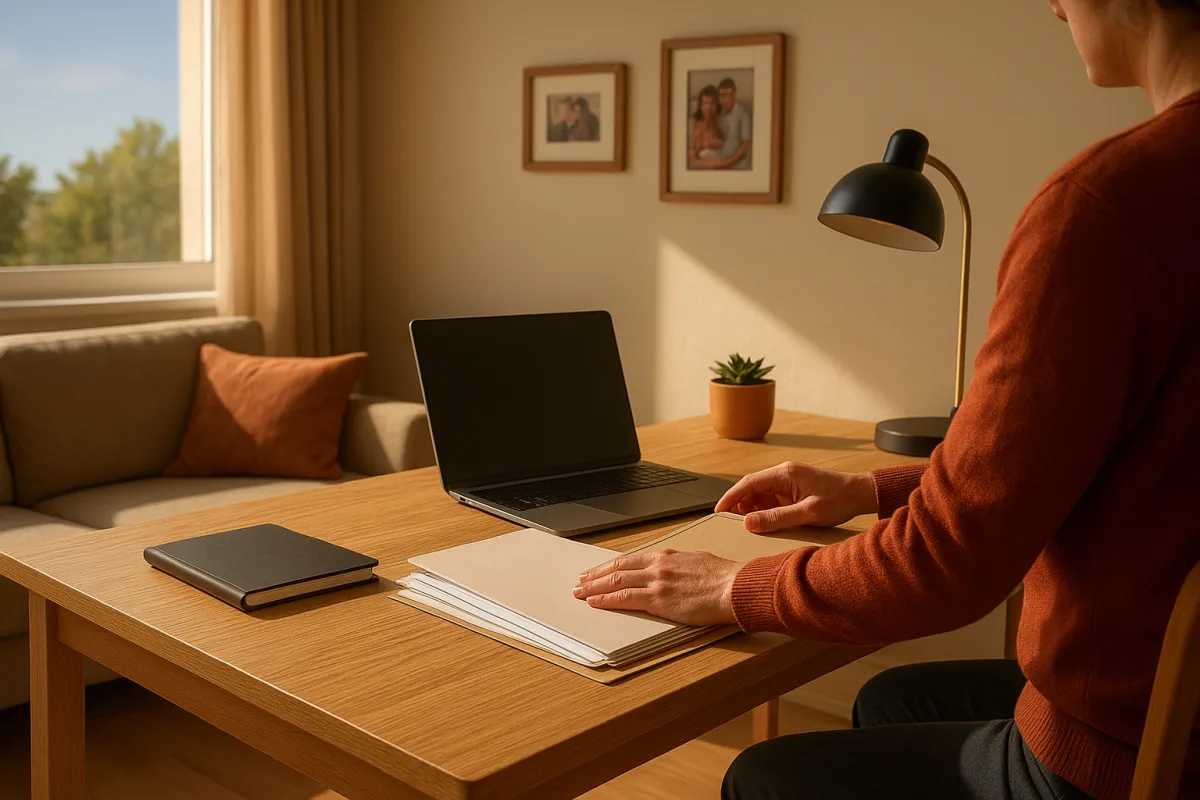
“Dedicated” does not have to mean a separate office. It can be one end of a table with work materials stored there, a particular chair, or a setup assembled at the start of the day and packed away afterward.
The boundary works best when paired with a start ritual. Open the day’s task list, set communication status, place the phone away, and identify the first output. Remote-work sources recommend structured routines and time blocking because home otherwise supplies endless alternative tasks. [11][17]
Use a shutdown ritual too. Spend a few minutes recording what was completed, writing the next action for unfinished work, checking tomorrow’s commitments, and closing work applications. This reduces the urge to keep mentally reopening work after the day ends. [16][17]
Avoid treating household chores as scheduled micro-breaks unless you know they remain small. The research brief found limited quantitative evidence on their productivity impact, but they easily expand into task-switching chains. A walk or a drink is easier to contain than “just starting the laundry.”
Meetings can undo an otherwise quiet day
Protected focus time cannot survive a calendar packed with low-purpose meetings. Before accepting or scheduling one, ask what decision, information, or work product requires people to be together rather than commenting asynchronously.
If a meeting is necessary, define the outcome in the invitation and keep the attendee list narrow. Poor communication and overloaded meetings are listed in the research brief among common focus-damaging mistakes. [16]
Put recurring meetings away from the focus period you are trying to protect. A 30-minute meeting in the middle of a 90-minute analysis block does not only consume 30 minutes. It fragments the time on both sides because you begin watching the clock.
Teams can make this easier with shared rules: no expectation of instant chat replies, visible focus statuses, meeting-free windows, and a clear definition of urgent contact. Those rules reduce the need for each person to defend concentration individually. [10][15]
Do not turn focus into a health optimisation project
Season, daylight, weather, and location can affect energy and mood for some people. The Independent and Atlassian’s Work Life have both covered seasonal productivity patterns, but the brief found no direct evidence that particular distraction techniques work better in one season or region. [18][20]
So it is reasonable to adjust practical conditions, such as using better task lighting in darker months or moving a focus block to your more alert time. It is not reasonable to claim that a new timer or app blocker will solve persistent fatigue or low mood.
If concentration changes sharply, sleep is poor, anxiety is intrusive, or mood is persistently low, treat that as a question for a doctor or qualified clinician. Productivity systems can reduce avoidable interruptions, but they are not a substitute for care.
Frequently Asked Questions
How can I minimize distractions at work effectively?
Start by turning off non-essential notifications and batching communication into two to four planned check-in times during the day. Reserve at least one 60 to 90-minute focus block on your calendar before meetings and messages fill the day, and inform colleagues about your availability. Additionally, solve the most immediate distraction first—whether it’s phone alerts, chat notifications, office noise, or visual clutter—and tailor your approach to whether you work remotely or in an office.
What are practical ways to reduce digital distractions during work?
Silence or disable non-essential phone alerts such as social media, news, and retail notifications, while keeping essential ones like family calls or calendar reminders active. Check messages and emails only during designated windows, for example, at the start of the day, before lunch, mid-afternoon, and before shutdown. Using physical barriers like phone-blocking devices can help reduce impulsive checking, but they are an option rather than a guaranteed solution.
How do I set focus blocks to avoid interruptions at work?
Schedule a protected focus block of 60 to 90 minutes early in the day before meetings and messages accumulate. Treat this block like an important meeting by putting it on your calendar and communicating to colleagues what it means, so they know not to interrupt you unless there is an emergency. Use a break rhythm that suits your work style, such as 25/5, 52/17, or 90 minutes followed by 15 to 20 minutes off.
What communication habits help minimize distractions at work?
Batch communication by checking emails and messages only two to four times daily rather than continuously. Set clear expectations with your team by sharing your focus times on a shared calendar and using status messages to indicate when you will respond next. Provide a way for genuine urgencies to reach you, such as a phone call or an urgent channel, and use asynchronous updates and shared documents, especially in remote work settings.
How can I manage distractions differently in remote vs office work?
Remote work benefits from asynchronous communication, dedicated workspaces, time blocking, and notification management to reduce distractions. In contrast, office work requires physical signals like visible desk indicators, headphones, or small signs to communicate availability and manage interruptions. Noise management and workspace arrangement are also more critical in offices, while remote workers rely more on structured communication windows and digital tools.
How we researched this
This article was assembled from 20 cited references.
Nothing here is based on hands-on testing. Where a figure or finding appears, it belongs to the source cited beside it, and the writing says so rather than implying otherwise. Every source is listed below so you can check it.
Sources
- How to Reduce Distractions When Working Remotely - Working Remotely Tools
- Desktop Productivity: 8 Techniques That Actually Work | Lifestack
- 18 Time Management Techniques That Actually Work in 2026 | Metaintro
- Minimize Digital Distractions: A Practical Guide to Regain Focus
- How Often Should You Take Breaks at Work? - ScienceInsights
- How to Minimize Distractions at Work: 7 Strategies - Versare Solutions LLC
- 6 Office Noise Reduction Strategies That Help You Focus Instantly
- Common Workplace Distractions and Their Impact on Productivity » Gender Studies
- Minimizing Distractions to Focus User Attention: Key Strategies for Designers - Page One Formula
- How to Reduce Distractions for Deep Work in Offices 2026
- The Ultimate Guide: 10 Best Practices for Working Remotely in 2026
- Remote Work Distraction Management – RemoteWorkly
- 15 Remote Work Productivity Tips That Actually Work in 2026 | NexaSphere
- How to Create a Distraction-Free Workspace · iCharles
- Office Distraction: 10 Practical Ways to Stay Focused Back at Work - Marketing Scoop
- You’re Destroying Your Deep Work—Stop These Productivity-Killing Focus Mistakes Now - Productivity News
- 10 Remote Work Productivity Mistakes to Avoid 2026
- The science of how seasons affect your mood energy and productivity | The Independent
- Listen Up, Doomscrollers: I Tried the 'Phone Detox' Device Going Viral-and Wow, It Works
- The science of seasonal productivity - Work Life by Atlassian
Related Articles
How to Deal with Interruptions at Work: Practical Strategies
Learn how to deal with interruptions at work using time blocking, notification controls, and focus techniques to protect your productivity.
Reduce Work Stress: Effective Strategies for Lasting Relief
Learn how to reduce work stress with workload management, clear boundaries, and weekly planning conversations for lasting relief.

Improve Focus During Meetings with Proven Strategies
Learn how to improve focus during meetings with clear agendas, active roles, effective note-taking, and managing distractions for better productivity.
Manage Work-Life Balance
Learn how to manage work-life balance with clear boundaries, dedicated spaces, and focused work hours for better productivity and personal time.