
How to Use Affirmations for Productivity Effectively
Learn how to use affirmations for productivity with believable, task-specific statements that boost focus and help you start work.
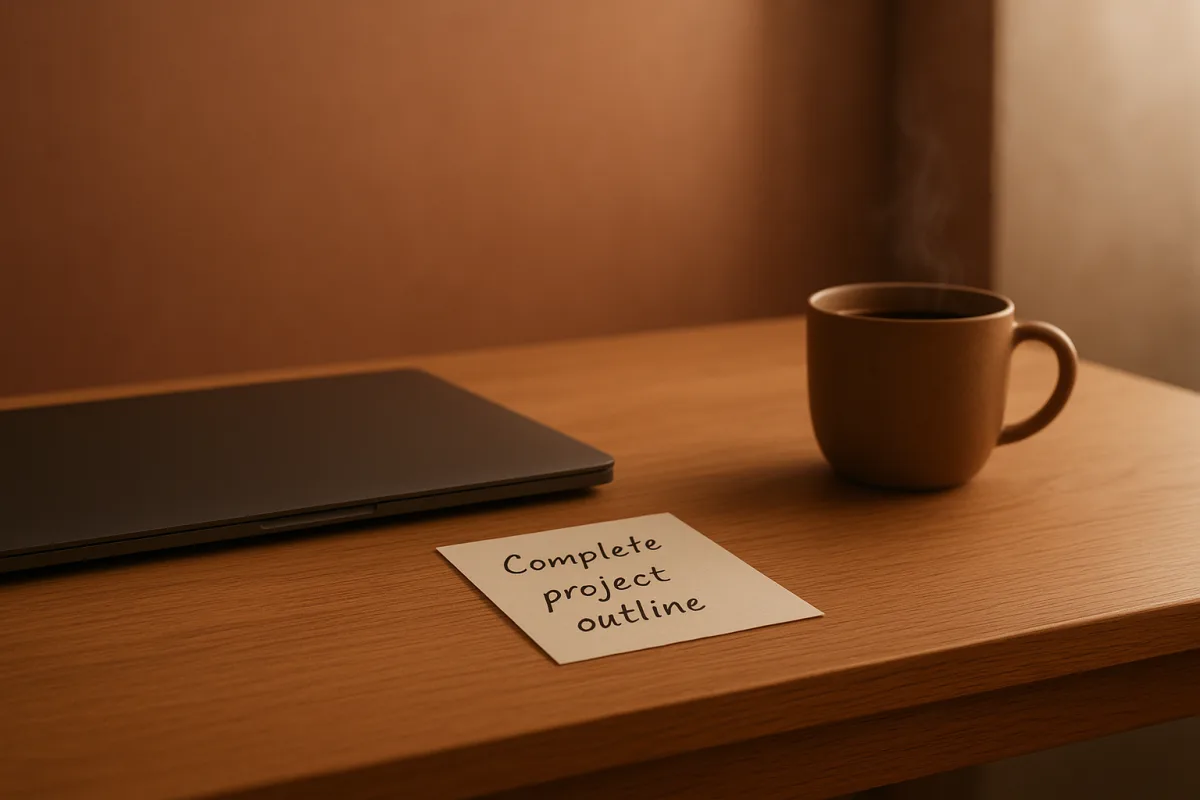
Start by lowering the claim
The first problem is expecting affirmations to create focus on command. There is not robust, large-scale evidence that affirmations alone produce measurable gains in productivity or concentration.
The evidence is more limited and uneven than most productivity advice suggests. A study attempting to replicate earlier positive-affirmation findings on self-esteem did not reproduce the expected effects, which is a useful warning against assuming the technique works uniformly. [15]
That does not make affirmations useless. It means the sensible use is modest: a short statement that helps you approach a task with less avoidance, rather than a substitute for planning, rest, skills, or a workable environment.
There is some relevant evidence for self-affirmation in a narrower setting. Research on people made to feel powerless found that self-affirmation could improve executive performance by restoring a sense of personal resources. [2] That is not the same as evidence that repeating “I am productive” improves a normal workday.
If focus problems are persistent, distressing, or tied to sleep, anxiety, low mood, medication, or attention difficulties, do not turn them into an affirmation-writing project. Those are questions for a clinician, not a productivity system.
Decide what the affirmation is for today
The next problem is vagueness. “I am successful” may sound encouraging, but it gives you no usable instruction at 9:12 a.m., when a difficult report is open and you are looking for something easier to do.
Choose one moment where motivation or focus routinely drops. It might be starting the first meaningful task, returning after lunch, opening an intimidating document, or staying with a task after the first confusing section.
Then write an affirmation for that moment, not for your entire identity. The practical aim is to make the next action feel possible enough to begin, even if you still do not feel especially confident.
For example, Positivity offers the focus-oriented statement, “I am focused, disciplined, and fully present in this moment.” [3] It is usable before a short block of concentrated work, but it may be too broad if “disciplined” makes you think of every task you have postponed.
CosmosTune uses a motivation-oriented version: “I am driven and determined to achieve my goals.” [4] That may suit someone preparing for a demanding, defined milestone, but it is less helpful when the immediate problem is simply writing the first rough paragraph.
For that situation, narrow the claim. Try: “I can write one rough paragraph now.” Or: “I will stay with this page for ten minutes.” These statements are not glamorous, but they point toward behavior you can actually observe.
Make it believable before making it positive
The point where affirmations often break is credibility. If you are behind on work and tell yourself, “I always finish everything early,” your mind has plenty of evidence to argue back.
That internal argument is not a failure of discipline. It is a sign that the statement is too absolute, too distant from current reality, or too disconnected from the actual work in front of you.
Guidance on writing affirmations consistently stresses positive wording, specificity, and a statement you can believe. [12][13] In practice, this means replacing identity claims that invite rebuttal with commitments to a manageable process.
Instead of “I never get distracted,” use “I can return to this task when I notice distraction.” Instead of “I am an excellent writer,” use “I can make a useful rough draft before I judge it.”
The wording still matters. A phrase such as “I will not procrastinate” keeps attention on procrastination, while “I begin with the smallest useful step” names the action you want to take instead.
Keep the statement short enough to remember without performing it. Many affirmation-writing guides recommend concise statements, often under 12 words. [12] That constraint is useful because long scripts tend to become reading material rather than a prompt to work.
A workable template is: “I can [specific action] for [short duration].” Examples include “I can sort these notes for ten minutes” and “I can answer the next three messages calmly.”
Do not collect twenty affirmations
Once you have found a few examples online, the temptation is to build a giant list. That creates another decision before work begins: which affirmation is the correct one today?
Use one primary statement for a week. If you have a second recurring problem, such as re-entering work after meetings, create one separate statement specifically for that transition.
AffirmationFlow and Affirmation Counter both publish extensive collections for productivity, focus, and deep work. [5][6] Collections are useful as raw material, but they are not a system by themselves.
Pick phrases that describe your actual friction point. Someone who delays starting needs a beginning statement. Someone who abandons work when it gets ambiguous needs a return statement. Someone who spirals after a mistake needs a reset statement.
Here is a small rotation that covers common moments without turning the practice into a catalogue:
- Before starting: “I begin with the next visible step.”
- During distraction: “I return to this task without drama.”
- Before a hard conversation: “I can be clear and prepared.”
- After an error: “I can correct one thing at a time.”
These are deliberately plain. The more a phrase sounds like a slogan borrowed from someone else, the more likely it is to feel disconnected when you need it.
Attach it to a moment that already exists
The next problem is forgetting. An affirmation app, a wallpaper, or a note in a journal cannot help much if you remember it only after the workday has already scattered.
Attach the statement to a stable cue. Say it while opening your task list, immediately before putting on headphones, after making coffee, or when you sit down for your first planned work block.
Morning and evening are commonly recommended windows, but claims about the ideal time and repetition count are not backed by a strong consensus. [7][8][9][10] Do not spend much effort trying to locate a magic hour.
A brief daily practice is easier to keep. Several affirmation guides suggest sessions of roughly 30 seconds to one minute. [7][11] Treat that as a practical convention, not a scientifically established dose.
For productivity, the more useful placement is often immediately before the task that causes avoidance. Read your sentence once, pause, then begin the first action while it is still in view.
That last part matters. If you repeat an affirmation for five minutes and then open social media, you have practiced a statement but not connected it to work. The link between cue and action is the useful experiment.
Pair the words with a visible first move
Affirmations can help with the moment before action, but they do not decide what action should be. You still need a task small enough to start and clear enough to recognize when it is done.
Write the first move beside the affirmation. “I begin with the next visible step” becomes “Open the project brief and highlight three requirements.” “I return to this task” becomes “Read the last two paragraphs and add one note.”
This pairing also prevents a common mistake: using affirmations as a way to feel ready before beginning. Often readiness arrives after several minutes of work, not before it.
If you want to add a focus practice, use one that has better evidence on its own merits. A systematic review and meta-regression of workplace mindfulness interventions found benefits for work-related well-being and stress outcomes. [20]
That does not establish that mindfulness plus affirmations is better than mindfulness alone. Research on the added effect of combining them remains inconclusive, so keep the practices separate enough to notice whether either helps you.
A simple sequence is enough: take three slower breaths, state your chosen sentence once, then work for a defined interval. Do not call that a neuroscience-backed focus protocol. It is a compact transition ritual.
Notice resistance instead of forcing repetition
The next snag is emotional disconnect. You may say the words while feeling embarrassed, irritated, or unconvinced. Repeating them harder usually does not solve that mismatch.
Advice on common affirmation mistakes warns against vague, unbelievable, emotionally disconnected statements, and against trying to practice when highly stressed or exhausted. [16] That is sensible, even though the exact rules have not been rigorously tested.
When you notice resistance, diagnose the sentence. Is it too big? Too generic? Is it asking you to deny something true, such as fatigue or uncertainty? Or is the task itself badly defined?
Then reduce the claim. Change “I am completely focused” to “I can give this task five honest minutes.” Change “I love difficult work” to “I can do the uncomfortable first step.”
You do not need to feel enthusiastic for a statement to be useful. You do need to be able to say it without feeling that you are being asked to lie.
Keep culture and language in the statement
A productivity affirmation does not have to sound highly individualistic. “I will outperform everyone” may be motivating for one person and alienating, arrogant, or socially uncomfortable for another.
Write in language that fits your values and responsibilities. If your work is closely tied to family, colleagues, clients, or a community, a statement such as “I will do my part carefully today” may land better than “I am unstoppable.”
The goal is not to choose the most forceful wording. It is to choose wording you can accept and act on repeatedly, without creating an inner argument before the task even begins.
You may also prefer modest language. “I can improve this draft” can be more usable than “I am a brilliant writer,” particularly if praise-focused statements make you skeptical or self-conscious.
Check whether it changes behavior
After a week, do not ask whether the affirmation made you a different person. Ask whether it altered the first five minutes of a specific kind of work.
Keep a minimal record: the task, the sentence used, whether you started within five minutes, and whether you returned after distraction. That is enough data to spot whether the ritual is helping with initiation.
Do not try to infer productivity from a better mood alone. Affective state and self-assessed productivity can be related, but self-reported productivity is not the same thing as completed work or sustained concentration. [1]
If the practice helps you begin, retain the one sentence and the cue. If it changes nothing after a fair trial, discard it without treating that as a personal failing.
The two elements most likely to survive an ordinary week are a believable sentence and a specific next action. Everything else, including the perfect timing, perfect repetition number, and perfect soundtrack, is optional.
Frequently Asked Questions
How can I create believable affirmations for productivity?
Create affirmations that are short, specific, and reflect what you can honestly do today. Avoid absolute or identity-based claims that invite internal resistance, and instead focus on manageable, concrete actions like “I can write one rough paragraph now.” This makes the statement believable and easier to accept.
When is the best time to use affirmations to improve focus?
Use affirmations at a reliable moment when motivation or focus typically drops, such as before starting a meaningful task or returning to work after a break. A brief 30-to-60-second practice integrated into your routine, like morning or evening, is more practical than chasing an ideal repetition count.
What makes an affirmation effective for getting work done?
An effective affirmation is brief (under 12 words), positively framed, specific to the task, and believable. It should serve as a prompt for the next concrete action rather than a vague identity claim, helping you approach the task with less avoidance.
How many affirmations should I use for productivity?
Use one primary affirmation at a time, ideally for about a week, to avoid decision fatigue. If you face different recurring challenges, create separate affirmations for each specific moment rather than collecting a large list to choose from.
How we researched this
This article was assembled from 20 cited references.
Nothing here is based on hands-on testing. Where a figure or finding appears, it belongs to the source cited beside it, and the writing says so rather than implying otherwise. Every source is listed below so you can check it.
Sources
- Are Happy Developers more Productive? The Correlation of Affective States of Software Developers and their self-assessed Productivity
- Reinstating the Resourceful Self: When and How Self-Affirmations Improve Executive Performance of the Powerless - PubMed
- Focus Affirmations for Concentration | Positivity
- Build Intrinsic Drive That Doesn't Fade | Passive Motivation Rewiring | CosmosTune - CosmosTune
- 55 Affirmations for Productivity and Focus | AffirmationFlow
- 35 Affirmations for Focus, Productivity, and Deep Work | Affirmation Counter
- How to Use Affirmations: How Often, When and How Long
- Morning vs Evening Affirmations: Best Time to Practise
- Best Time to Listen to Affirmations: The 4 Windows That Work
- How Often Should I Repeat Affirmations? | Greatest Affirmations | GreatestAffirmations
- How Long Should Daily Affirmations Be
- How to write affirmations, with 50 examples | Subliss
- How to Write Affirmations That Work | Breakout
- Can Affirmations Be Long? Discover the Truth About Length– Magick
- On the failure to replicate past findings regarding positive affirmations and self-esteem - ScienceDirect
- Common Mistakes in Working with Affirmations (and How to Fix Them) | VISIYA · VISIYA
- The Focus Formula: How Hypnotic Affirmations Supercharge Productivity & Flow
- What Are the Best Success Affirmations? | My Brain Rewired
- The Science Behind Self-Affirmations | Psychology Today
- Mindfulness-Based and Mindfulness-Informed Interventions at the Workplace: A Systematic Review and Meta-Regression Analysis of RCTs | Mindfulness | Springer Nature Link
Related Articles

Visualization for Productivity
Learn how to use visualization for productivity with process-focused mental rehearsal to boost motivation and prepare for work tasks effectively.
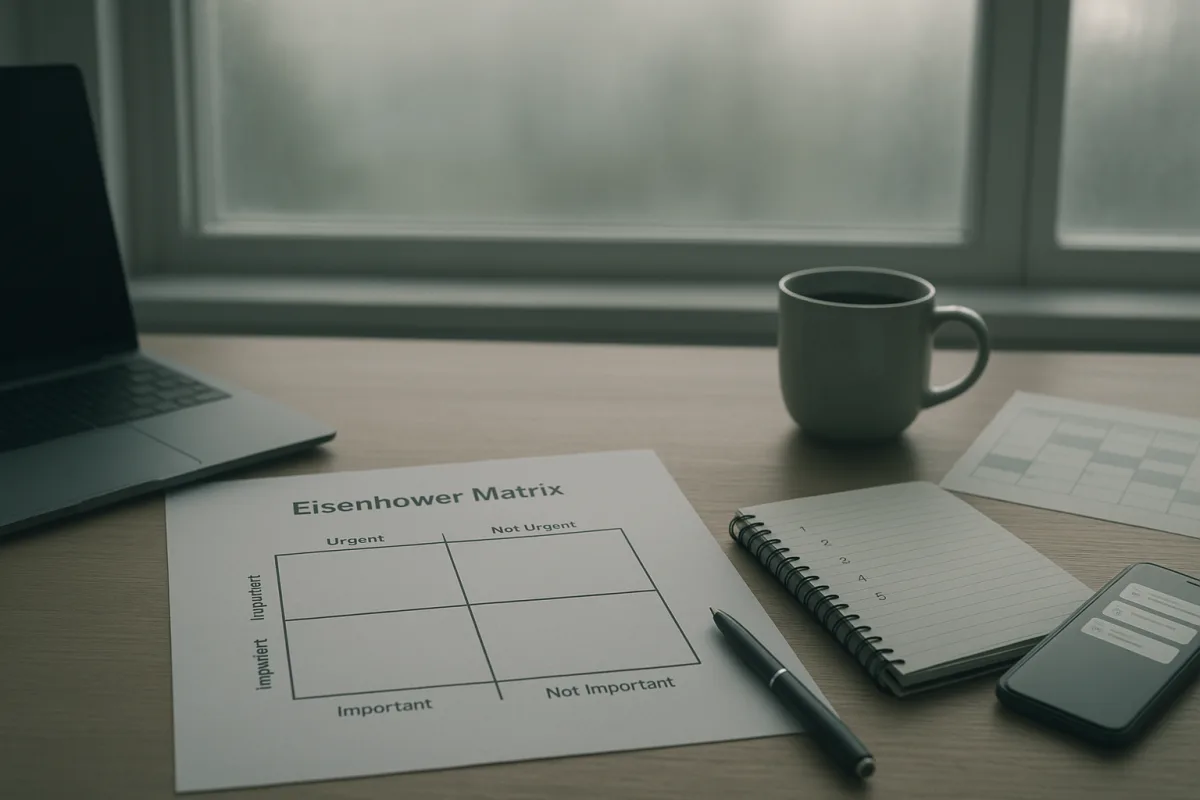
How to Prioritize Tasks Effectively for Better Productivity
Learn how to prioritize tasks effectively using proven methods like the Eisenhower Matrix and impact scoring to boost your productivity.
Structured Focus Intervals
Learn how structured focus intervals like the Pomodoro technique improve productivity with timed work and breaks for better concentration.
80 20 Rule for Productivity
Learn how to use the 80 20 rule for productivity to identify and focus on tasks that drive the most results each week.