
How to Stay Motivated at Work
Learn how to stay motivated at work with actionable tips on task design, mindset, breaks, and reframing meaning to boost your productivity.
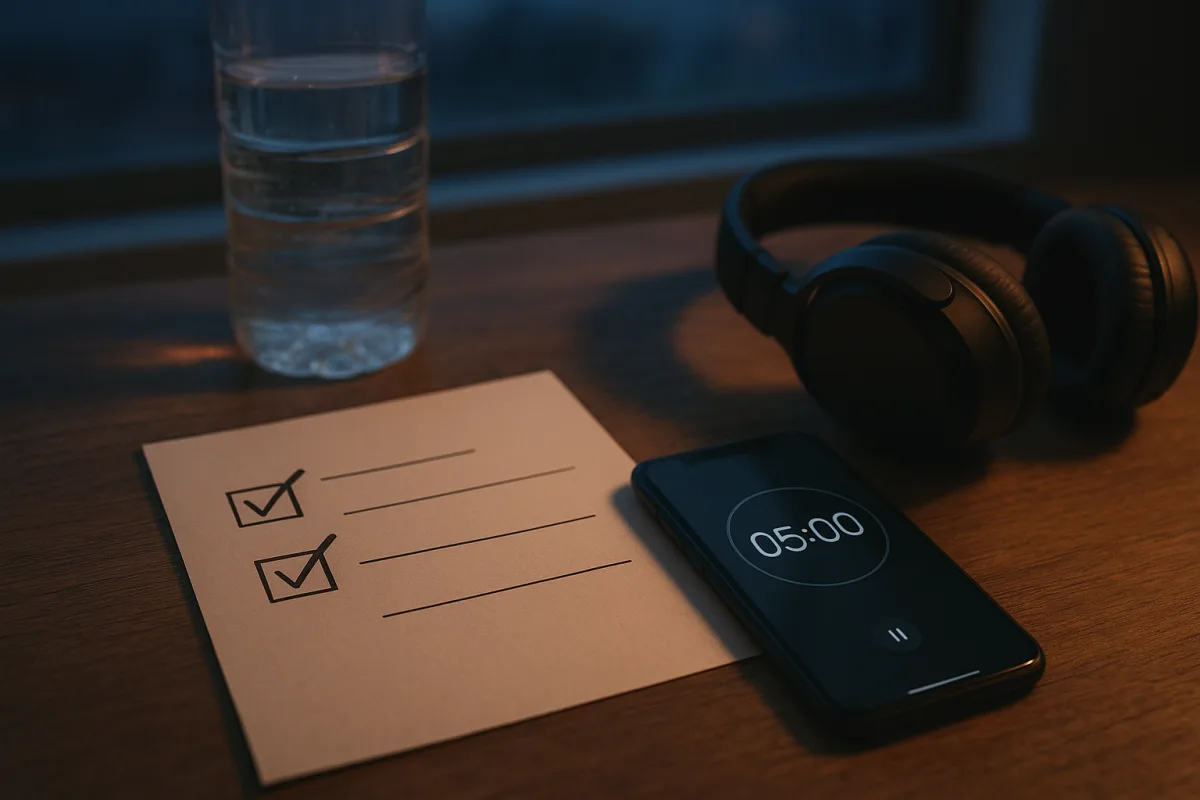
The first problem: the task is too vague to begin
“Finish the proposal” is not a motivating task. It is a container holding research, decisions, drafting, revisions and the possibility that someone will dislike it. The brain reasonably postpones work when the finish line is invisible.
Make the first target an output that can exist by the end of one or two sessions. For a proposal, that may mean a one-page outline with three recommendations. For analysis, it may mean a cleaned dataset and two charts.
The goal-setting guidance collected by DumbNinja recommends milestones at three scales: tangible outputs over one or two sessions, weeks-long targets such as a monthly sales objective, and quarterly markers for longer annual work. [8] That sequence is useful because it gives today’s work somewhere to land.
Write the immediate milestone in a measurable form before opening email. “Draft the problem section, 400 words, using the client notes” is workable. “Work on the problem section” leaves too much room for browsing, rearranging folders and calling it preparation.
Use SMART criteria if your workplace already uses them, but do not turn the planning step into another project. The useful parts are specificity, a visible measure and a deadline you can review. [8][21]
At the end of a session, record one line: completed, blocked, or changed. This creates evidence of movement, which matters more for enthusiasm than repeatedly asking whether you feel motivated yet.
Then the work stops being interesting
A task often loses energy after the easy beginning. The research-supported response is not positive thinking. It is to shift from proving your ability to improving a method.
A study in Current Psychology linked an iterative mindset with habits and work productivity. [3] In daily terms, this means treating an unsuccessful draft, sales call or technical attempt as information for the next version, not a verdict on whether you are suited to the job.
Ask three narrow questions after a stalled block of work: What did I try? What specifically prevented progress? What will I change in the next attempt? Keep the next change small, such as changing the order of research, asking one person for clarification, or testing a shorter format.
Pair this with mastery-approach goals, goals about getting better at a capability rather than outperforming someone else. If you write reports, track whether your argument becomes clearer or your first draft needs fewer structural changes, rather than only whether it receives praise.
This is particularly helpful for work with delayed feedback, including operations, research, administration and professional development. It is less useful when the real problem is a missing decision, unreasonable workload or conflicting instructions. No mindset fixes a job that has not provided the inputs required.
When the task feels pointless
Sometimes the job is clear and manageable, but it feels detached from anything that matters. Cognitive crafting is a more concrete response than being told to “find your purpose.”
A randomized controlled trial reported in the International Journal of Applied Positive Psychology examined a cognitive crafting intervention focused on reframing the meaning of work. [20] The practical version is to identify the person, decision or downstream process that your completed task changes.
For example, payroll reconciliation may mean employees are paid correctly. Updating a knowledge base may mean a colleague does not spend an hour solving a problem already solved last month. Quality checks may prevent a customer receiving an avoidable error.
Write one sentence at the top of the task note: “This helps X do Y.” Make it credible and specific. If you cannot write one, ask your manager or project owner what decision the work informs and who uses it.
Do not force a grand social mission onto routine work. The evidence supports reframing, not pretending every spreadsheet is a calling. Sometimes the honest meaning is modest: reducing rework for your team, preserving an accurate record, or meeting an obligation reliably.
When attention drops halfway through
The standard 25-minutes-on, five-minutes-off Pomodoro rhythm is a tool, not a finding about human biology. The research brief finds no definitive optimal work-break interval, and the best ratio varies by task complexity and individual preference. [5][6]
Use 25/5 when the work has natural stopping points: responding to requests, processing invoices, editing discrete sections, or handling administrative queues. The short deadline can make an unpleasant but bounded task easier to start.
For writing, programming, analysis or other work that takes time to enter, a longer block may be more sensible. Try a 52/17 pattern or a roughly 90-minute focus period, then compare the quality and amount completed with shorter cycles. [5]
Experiment for a week with one task type, not with your entire working life at once. Track the block length, the task, whether you resumed promptly after the break, and whether the work actually improved. That will tell you more than copying another person’s timer.
When you do break, move. University of Queensland research reported that microbreaks involving physical activity can boost energy and motivation at work. [4] Stand up, walk to refill water, stretch, or take a brief lap outside instead of switching immediately to social media.
General recommendations often suggest short activity breaks every 25 to 30 minutes, but the research brief found no evidence for an ideal frequency or duration. [4][7] Use the schedule as a prompt to interrupt sedentary drift, not a rule you have failed if a meeting or deep task runs longer.
When your workspace makes work harder than it needs to be
Environmental changes will not make a bad assignment compelling, but they can remove background friction. Research in Scientific Reports found workspace wall colours affected emotion and productivity measures, while office acoustic studies show that sound environments can affect performance. [1][9]
The mechanism for noise effects remains contested. [9][10] That is a reason to test your own environment, not to buy acoustic products because a generic productivity article says you should.
Run a simple comparison. For three similar tasks, work once in your usual setting, once with lower noise or headphones, and once with a different sound condition. Record errors, completion time and your willingness to resume after interruption.
Lighting and temperature are worth checking before adding another app. A longitudinal hybrid-work field study from the Information Sciences Institute linked each increase in lighting comfort with a 4.3 percent productivity increase, and temperature comfort with a 2.4 percent increase. [2]
“Comfort” is the important word. Adjust glare, screen position, room temperature and task lighting where you can. If your eyes hurt, you are repeatedly cold, or your home desk creates pain, raise it as a workplace issue rather than treating discomfort as a discipline deficit.
Sleep quality also belongs in the foundations, with a 2026 Journal of Business and Psychology finding included in the research brief linking it to work motivation. But persistent fatigue, sleep problems, low mood or concentration difficulties are medical questions, not productivity variables to optimise. Speak with a doctor.
When you work remotely and enthusiasm turns into surveillance
Remote work removes some annoyances, but it can also remove informal feedback, boundaries and the visible sense that other people are working alongside you. The wrong response is usually more status meetings and closer monitoring.
Remote-work guidance in the research brief warns that micromanagement and frequent synchronous meetings can backfire. It recommends outcome-based management and lighter meeting loads instead. [11][13] Agree on outputs, decision owners and check-in points, then give people room to complete the work.
If you manage others, replace “Are you online?” with “What result will be ready by Thursday, and what might block it?” This is not hands-off management. It is clearer management, with help offered around dependencies rather than visibility.
If you are not the manager, make your progress visible without narrating every hour. Send a concise update: completed output, current blocker, next milestone. That reduces the uncertainty that often creates unnecessary check-ins.
Recognition can help with connection, but there is no identified research threshold for how often remote recognition works before it becomes tiring. [19] Keep it specific: name the work, its effect and the person who did it. Generic public praise soon becomes background noise.
When someone else’s motivators do not work for you
The motivational levers at work are not universal. A 2026 workplace culture report found 69.4 percent of younger workers were motivated by comfort, personal connection, excellence and autonomy, while about 7 percent named compensation and about 4 percent named purpose as top motivators. [19]
That does not mean pay and purpose do not matter. It means a pay bonus or mission statement may be a poor answer when what someone actually lacks is a manageable workspace, trusted colleagues, room to decide how to work, or a chance to develop skill.
Autonomy also has conditions. Research cited in the brief found it supports motivation when competence and relatedness are present too. [20] Giving a new employee total freedom without training, context or access to colleagues is abandonment disguised as empowerment.
Culture matters as well. IESE reporting noted that North American workplaces often emphasise individual performance and financial rewards, while European workplaces may put more weight on group incentives and seniority-based rewards. [18] Treat these as broad patterns, not personality tests.
Before proposing incentives, ask people what makes a good working week possible: control over methods, useful feedback, team contact, learning, predictable time, pay, or something else. A solution that fits one team or region can land badly in another.
When tracking becomes another form of procrastination
Use tracking to answer one question, not to build a personal control room. The right tool depends on whether your problem is remembering a habit, seeing tasks, noticing distractions or coordinating work with others.
Streaks is an iOS habit tracker, with no price specified in the research brief. It suits a small repeated behaviour, such as taking a movement break or writing a daily next-step note, rather than managing a complex project.
TickTick costs $2.79 per month and combines tasks, habits and a Pomodoro timer. [17] It suits someone who wants milestones and work intervals in one place, although the timer should still be adjusted to the task rather than treated as a universal setting.
RescueTime costs $12 per month and tracks time and distractions. [17] It suits people who suspect their attention is being fragmented and want evidence about where time goes. It is not a motivation cure, and its reports can encourage unhelpful self-surveillance if you already know your workload is excessive.
KUBBO has a free version with premium options and uses gamified habit tracking with an AI coach. [17] It suits people who genuinely respond to game-like prompts, but it may irritate anyone who finds points and streaks infantilising.
Notion costs $10 per month and functions as an all-in-one workspace with collaboration features. [16][17] It suits teams or individuals who need shared project notes, milestones and decisions together. It is a poor choice if building the workspace becomes more absorbing than completing the work inside it.
Prices and plans can change, so check official listings before subscribing. There is no direct evidence in the research brief comparing these tools’ cost-effectiveness. Choose one for a two-week trial, keep only the data that changes a decision, and stop if maintaining the system becomes the day’s most consistent task.
Frequently Asked Questions
How can I break down tasks to stay motivated at work?
Break tasks into small, visible deliverables that can be completed in one or two work sessions. For example, instead of “finish the proposal,” set a goal like “draft the problem section, 400 words, using client notes.” This specificity makes progress measurable and helps the brain see a clear finish line, which supports motivation.
What mindset helps maintain motivation during difficult tasks?
An iterative mindset focused on mastery helps maintain motivation when tasks become challenging. Instead of viewing setbacks as failures, treat them as information to adjust your approach. Ask what you tried, what blocked progress, and what small change you will make next, aiming to improve your method rather than prove your ability.
How do microbreaks affect motivation at work?
Short activity-based microbreaks can restore energy and motivation during desk work. However, there is no proven perfect break schedule; the best work-break ratio varies by task complexity and individual preference. Using breaks tailored to your needs can help sustain motivation.
What is cognitive crafting and how does it improve work motivation?
Cognitive crafting involves reframing the meaning of your work by identifying who benefits from your task and how. Writing a simple sentence like “This helps X do Y” makes the task’s impact concrete and credible. This approach helps find motivation in routine or seemingly pointless work without forcing a grand purpose.
How can I reframe the meaning of routine tasks to stay motivated?
To reframe routine tasks, identify the specific person, decision, or process your work supports. For example, payroll reconciliation ensures employees are paid correctly, or updating a knowledge base saves colleagues time. Writing this meaning down helps make the task feel more relevant and motivating without exaggerating its importance.
How we researched this
This article was assembled from 21 cited references.
Nothing here is based on hands-on testing. Where a figure or finding appears, it belongs to the source cited beside it, and the writing says so rather than implying otherwise. Every source is listed below so you can check it.
Sources
- Effects of workspace wall colors on productivity and emotion via immersive VR and physiological data | Scientific Reports
- Environmental Comfort in Hybrid Work: A Longitudinal Preliminary Field Study of Home and Office Workspaces | Information Sciences Institute
- Motivation and successful goal pursuit: an iterative mindset predicts habits, weight loss, and work productivity | Current Psychology | Springer Nature Link
- Microbreaks key to boosting energy and motivation at work, study finds
- Work-Break Ratio Timer: Finding Your Ideal Productivity Rhythm – The Blog Timer
- The Complete Work Break Timer Guide: Stand… | MoveToZero
- How Often Should You Take Breaks at Work? - ScienceInsights
- Goal Setting and Measurable Milestones at Work — DumbNinja
- When Sound Helps or Hurts: Behavioral and EEG Evidence on the Dual Effects of Indoor Acoustic Environments on Office Work Performance | MDPI
- Environmental sounds on office worker performance: Non-invasive monitoring of physiological responses in laboratory settings - ScienceDirect
- 9 Strategies for Motivating Remote Employees in 2026
- Effective Remote Team Management Strategies That Work in 2026 — WriteUpCafe
- 10 Remote Work Productivity Mistakes to Avoid 2026
- Remote Work Burnout — Causes, Signs, and Prevention (2026 Guide) — remoty.work
- The Best Deep Work Apps For Focus And Productivity - Shift Blog | Browser Tips, App Integrations, and Productivity | Shift Browser
- 如何使用工作区 | NotionChina
- Productivity Software Pricing (2026): 20 Tools Compared | Outmano
- American vs European Work Culture: 15 Workplace Differences That Affect HR — Business Analyst Learnings
- 2026 State of Workplace Culture & Connection | Research Report
- The Search for Meaning at Work: A Randomized Controlled Trial of a Cognitive Crafting Intervention | International Journal of Applied Positive Psychology | Springer Nature Link
- "Goal Setting: Frameworks and How to Do It"
Related Articles

Improve Focus During Meetings with Proven Strategies
Learn how to improve focus during meetings with clear agendas, active roles, effective note-taking, and managing distractions for better productivity.

Manage Work-Life Balance
Learn how to manage work-life balance with clear boundaries, dedicated spaces, and focused work hours for better productivity and personal time.

Mindfulness at Work Benefits: Focus, Stress Relief, and More
Discover mindfulness at work benefits including improved focus, stress relief, and how it supports productivity without promising more output.
How to Prioritize Tasks Effectively for Better Productivity
Learn how to prioritize tasks effectively using proven methods like the Eisenhower Matrix and impact scoring to boost your productivity.